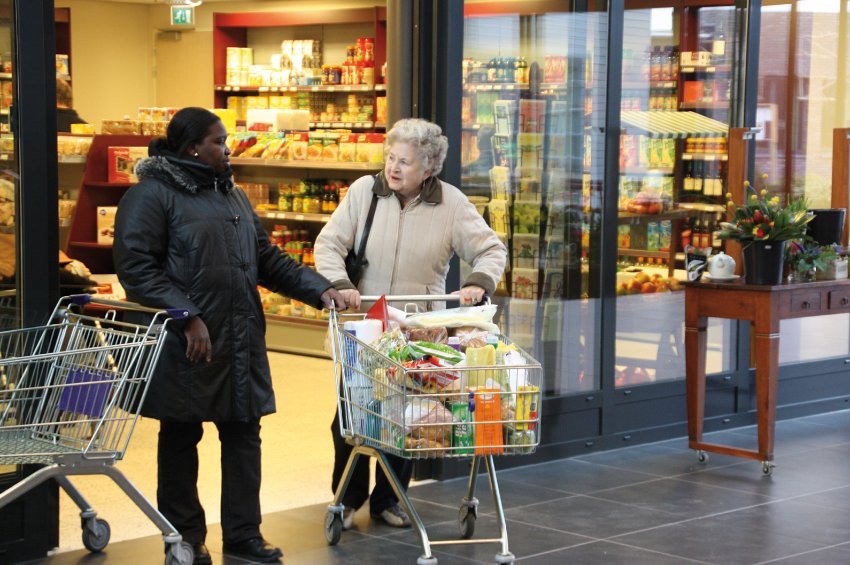
Hogewey Nursing Home-An Attempt at Normal Life for Dementia Patients


Photo Courtesy of Isabel van Zuthem

At Bild, we are excited to see “culture change” moving forward in long-term care. Recently published articles related to the Hogewey Nursing Home in Weesp, Netherlands appear to reveal a successful culture change story. Hogewey is a nursing home dedicated to the care of residents suffering from severe dementia. What’s different about Hogewey is the holistic approach taken in the care model, and their dedication to accommodating the free will of their residents. While residents are, in fact, confined to the grounds of the Home, they are also allowed to move about the grounds at their own discretion.

Front doors are never locked, residents are allowed to stroll around in their “house shoes”, leave their umbrellas at home, and eat chocolate for breakfast. Hogewey keeps them safe, while accommodating the freedom to choose their own path throughout the day. There is a small supermarket within Hogewey where residents may shop for groceries without paying for them. Residents are allowed to bring home whatever groceries they want, the care staff will return unnecessary items later that day.

Hogewey houses 152 residents within the 23 unit complex. There are six or seven residents per unit, arranged around a central living area, with two caregivers on staff at each unit. At Bild, we were very impressed to learn that Hogewey has determined seven “accommodation styles” for their residents based on typical Dutch lifestyles. Residents are placed together according to their tastes: rustic, urban, Christian, upscale, Indonesian, culturally accomplished or familial. We find these lifestyle choices to be an interesting architectural approach to placing a resident comfortably in the company of others.

Bild is pleased to learn about the positive progression of the Hogewey facility. We intend to stay informed in regards to this facility, and watch how this model grows and evolves. We are excited that awareness for long-term care reform is spreading everyday, and are proud to do our part in making positive changes for our fellow citizens.

The Hogewey home has been covered by ABC News as well as the New York Times.

We always enjoy hearing from our readers. Please email sasha@bildarchitecture.com with any comments or questions.


Posted in life-long design | Comments Off

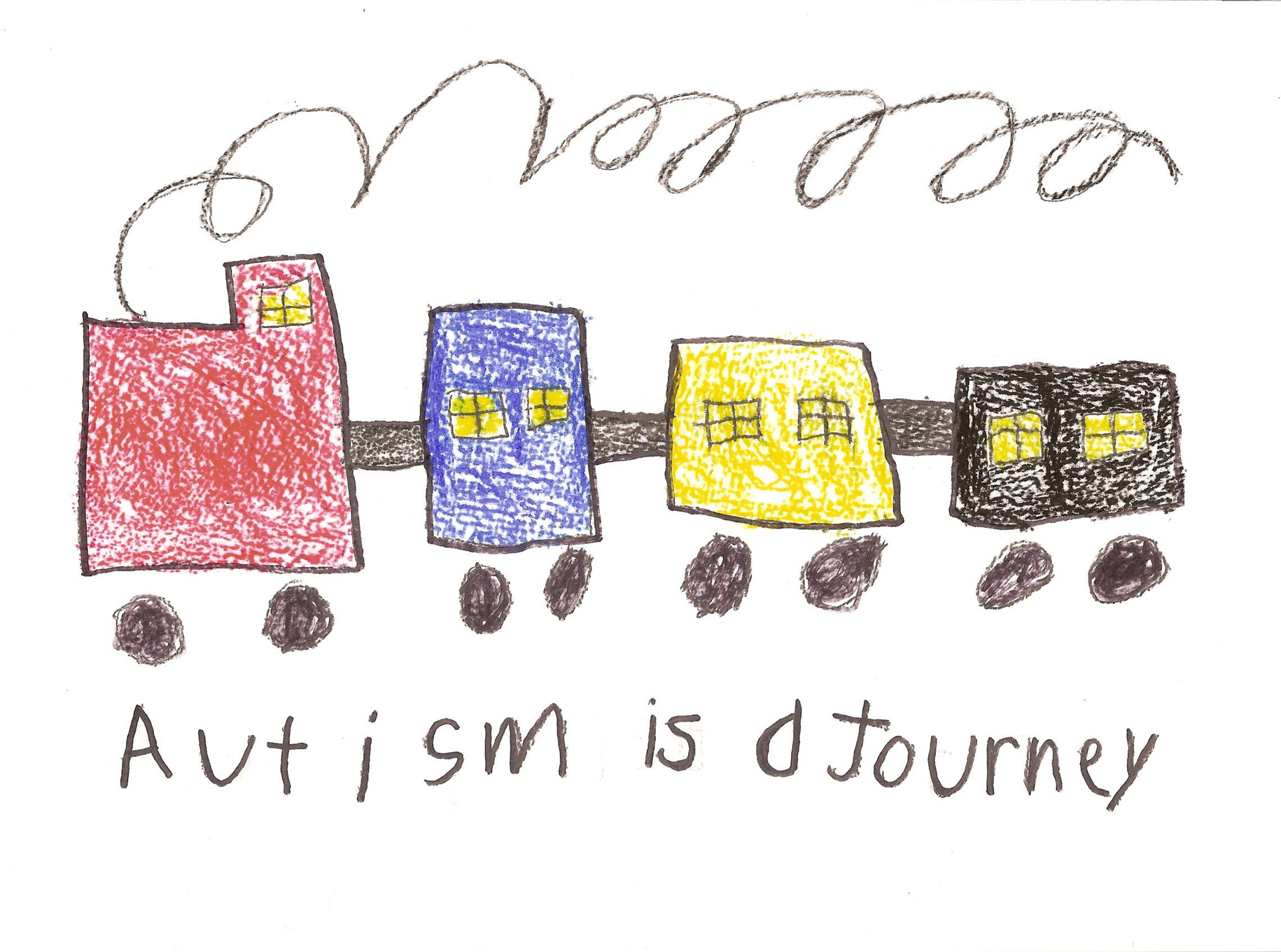
Architecture for Autism Spectrum Disorders: Designing with Ability in Mind

Today’s blog entry during Autism Awareness Month looks at design for autistic individuals through the lens of ability, rather than disability. It seems that when considering Autistic individuals much emphasis could be placed on the individual’s fears, dislikes and disabilities. This leaves little time and energy to concentrate on an individual’s likes, abilities, and inspirations. Finding ways to provide motivation to perform needed tasks is as important, if not more important, than concentrating on the individual’s inability or unwillingness to complete the task.

At Bittersweet Farms in Whitehouse, Ohio staff is encouraged to view a client’s support plan first in a positive light before considering the negative aspects. This approach has provided an environment of reduced frustration and increased empowerment for autistic clientele. This approach also leaves staff with many positive solutions in resolving a situation that has degraded to frustration or irritation.

One Cleveland-based School for Autism was designed with a well thought-out list of criteria in mind. However, this list of criteria refers mostly to design elements that should be avoided by architects. Elimination of sharp corners, control acoustics, provide lighting sources that do not create a distraction, reduce HVAC noise, and limit stimulation, are just a sample of the design criteria considered for this project. Each of these criteria focuses on disability related to Autism. Instead, perhaps these design criteria should be rewritten to consider abilities. In addition to the above listed design elements that should be avoided,  designers for this project also considered designing spaces for “one-on-one student teacher activities” as well as “allowing children to make autonomous choices”; elements that are far more ability-driven in nature.

Another consideration in designing for ability lies in the belief that many autistic learners are visual learners. How can architects use this ability to better design spaces for these learners? Perhaps instead of thinking about the visual environment as “over-stimulating”, designers can consider using visual stimulation as an aid to learning. Visual stimulation could be used to help individuals orient themselves, and find context within their environment.

Knowing what motivates autistic learners can provide a very meaningful guide to designing environments that empower, as opposed to tightly controlled learning environments. We all deserve to function in spaces that appeal to our strengths, and inspire determination to be the best we can be, regardless of “ability.”

Thank you ArchDaily for raising awareness of this issue. Find more articles written by Christopher Henry here.

We enjoy receiving your feedback. Please feel free to contact us by email: sasha@bildarchitecture.com

Posted in educational, news | Comments Off

Architecture for Autism Spectrum Disorders: Spatial Considerations

Continuing our series on Architecture for Autism Spectrum Disorders, we take a look at Spatial Considerations. The conflicting opinions of architects regarding lighting design continue in regards to space planning. It is believed that individuals with autism tend to be more uncoordinated than their “neuro-typical” counterparts. This may inspire a feeling of uncertainty in the size and reach of their bodies. Therefore, this is an important consideration for architects when designing learning spaces for autistic individuals.

Many architects believe, and rightly so, that they play a role in creating spaces that may help these individuals better understand their place in the environment. Some are of the opinion that spatial volume should be kept small, with intimately proportioned learning environments, thus better reflecting the often one-on-one student/teacher ratio. Others believe that ample space for each child will reduce anxieties surrounding the perceived invasion of personal space.

The small, intimate proportions of the River Street School, designed in 1989, have proven to be a positive characteristic of the school. Now, 14 years later, the River Street School plans to keep those intimate proportions when designing the school’s renovation. Those who believe smaller spatial volumes to be best argue that autistic children feel overwhelmed in large, more complex environments.

Architect Simon Humphreys, designer of the Thomas Bewick School, argues that rather than confining students to small spatial volume areas, students should be allotted a very large amount of personal space. When designing the Thomas Bewick School, Humphreys requested the program to allow at least 460sq. ft. per student. Allocating more space per student might encourage students to feel less guarded and less threatened than they would in smaller spaces. Many believe that autistic students feel as though their personal space is being invaded by other students in close proximity.

While large volume versus small volume continues to be a topic of debate, so does variety and flexibility of space. Some claim that a variety of flexible spaces could make everyone more comfortable and happy. Classrooms with moveable workstations and wall partitions could provide the staff with the flexibility to prepare for any learning situation. However, many feel that it is important for autistic individuals to encounter more predictable space layouts. Students who may be averse to change would likely feel anxious when entering such an environment, never knowing how the room will look on any given day. Teachers have also reported that widely flexible spaces do not serve any one purpose particularly well, and may even promote a lack of order.

Spatial considerations are of the utmost importance to designers when challenged with space layouts for a particular population. We look forward to more research being performed regarding long term results of the small-space versus large-space, versus flexible-space debate.

Thank you ArchDaily for raising awareness of this issue. Find more articles written by Christopher Henry here.

We enjoy receiving your feedback. Please feel free to contact us by email: sasha@bildarchitecture.com


Posted in educational, news | Comments Off

Architecture for Autism Spectrum Disorders: Lighting

Since April is Autism Awareness month, Bild Architecture has dedicated this month’s blog to exploring architectural design theory in designing for Autistic learners. Designing learning spaces for children on the Spectrum is often misunderstood and has come under much debate over the years. Many believe the “sensory sensitive” approach, aimed at providing environments that tightly control sensory stimulation, are the best learning environments for children on the Autism Spectrum. While others believe the “neuro-typical” approach, aimed at providing environments more consistent with the “real world”, will be the most beneficial to forward the level of functioning in Autistic children.

Today’s blog will touch on the highly debated subject of lighting. The “sensory sensitive” advocates advise us to incorporate limited daylighting and exterior views in our designs, keep ceiling heights low and spatial volumes small, while also avoiding the use of direct fluorescent lighting. The Architecture firm Fletcher Thompson had this to say, “Because of the extreme sensitivity to sensory stimulation clerestory windows and skylights may be counterproductive because shifting patterns of daylight can complicate the visual environment.” Many believe that glare, sunshine, and windows with exterior views cause unnecessary distractions in Autistic learners. James Vance & Associates Architects’ took a slightly different approach to this theory designing wide window overhangs and high sills to cut down on direct sunlight, while allowing some natural light and views of the sky and treetops.

The “neuro-typical” advocates, in contrast, believe environments should reflect real world situations as much as possible, leaving behind the safe havens that allow further withdrawal. The argument is that individuals with autism struggle with translating skills to unfamiliar environments. High ceiling heights, large spatial volumes, and high levels of daylight with outside views will mimic the colors, sounds, lighting and spatial volumes found in the typical environments we encounter in everyday life. Haverstock Associates of London tried to strike a balance by bringing bright daylight in through north facing skylights and large windows, thus providing daylighting without the harsh shadows and contrasts resulting from direct sunlight. Aitken Turnbull of Scotland designed a space flooded with bright sunlight, and floor-to-ceiling windows with a view of the play area outside.

The “neuro-typical” argument goes on to include the welfare of the staff. Sunlight and exterior views have long been thought to increase productivity and reduce sick days for employees. Some believe the advantages of a healthy and happy staff may outweigh the disadvantages of increased sensory stimulation in Autistic individuals.

Nearly everyone can agree that individuals with Autism require an educational program which is consistent, and focuses on repetition and structure. As architects, we strive to design spaces to help students and staff best accomplish these goals. At Bild, we suspect that in working with students with autism, there are times when both the “sensory sensitive” and “neuro-typical” approaches would be warranted. It seems that environments geared towards learning of new skills might use the sensory sensitive approach, while environments geared towards application of those skills could use the neuro-typical approach. The increasing amount of research and awareness surrounding autism will help to close the gap on the debate between the two approaches, resulting in more cohesive environments for everyone involved.

Thank you ArchDaily, for raising awareness on this topic. Christopher Henry’s article “Designing for Autism: Lighting” can be found here.

We enjoy receiving your feedback. Please feel free to contact us by email: sasha@bildarchitecture.com

Posted in educational, news | Comments Off

Bild Architecture to Speak at LeadingAge & Geriatrics Conferences

Our own Evan Carroll will be speaking at two conferences this spring. The Maine and New Hampshire LeadingAge Conference will be held on May 16th and 17th. Evan will be co-presenting with Maureen Carland and Deb Fournier of Maine Veterans’ Homes. Evan, Maureen, and Deb will discuss the concept of meeting residents’ needs through design in their talk “Design From Within: A Person Directed Approach to Building and Renovating Communities.”


The Maine Geriatrics Conference is in early June this year. Evan will be co-presenting with his mentor and Learning by Living program creator Dr. Marilyn Gugliucci of the University of New England and Kara Janes, MSW Student. During their session “Learning by Living: A Social Worker Student’s and Architect’s Experiences”, Evan and Kara will talk about their experiences living as a resident in a nursing home under the supervision of Marilyn Gugliucci and her program Learning by Living.

We enjoy receiving your feedback. Please feel free to contact us by email: sasha@bildarchitecture.com

Posted in life-long design, news | Comments Off

Bild Co-presents with Dr. Marilyn R. Gugliucci

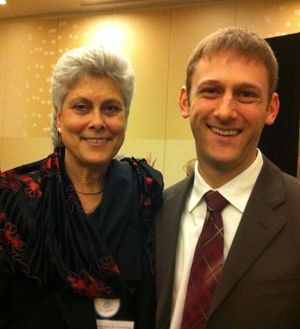
Bild Architecture is thrilled to have presented “Architect’s Lessons Learned” with Dr. Marilyn Gugliucci at the 2012 Association for Gerontology in Higher Education’s national conference. The conference was held in late February of 2012 in Arlington, Virginia. Bild’s Evan Carroll presented his findings in response to participation in Dr. Gugliucci’s Learning By Living program.

The AGHE organization is involved in some exciting new ideas in Gerontology. We received insightful feedback from dedicated members of the gerontology profession. It’s always rewarding to find a group of people who are passionate and determined to create meaningful changes in our care model for older adults.

We were very pleased to learn that our colleague and mentor Dr. Gugliucci, has been awarded the 2012 Hiram Friedsam Mentorship Award. Congratulations Marilyn! You are a superb mentor and a wonderful friend!

We enjoy receiving your feedback. Please feel free to contact us by email: sasha@bildarchitecture.com

Posted in life-long design, news | Comments Off

LEED AP BD+C Certification

Evan has now earned his LEED AP BD+C certification.

As stated by the LEED website:

“LEED certification provides independent, third-party verification that a building, home or community was designed and built using strategies aimed at achieving high performance in key areas of human and environmental health: sustainable site development, water savings, energy efficiency, materials selection and indoor environmental quality.”

The knowledge that Evan gained in earning this credential will be of a clear benefit to all of Bild’s clients. Please contact us if you have any questions about LEED or the LEED certification.

As stated by Evan:

“I am just glad to have this credential under my belt! The testing was rigorous and the threshold of knowledge of the LEED credit system was high. I’m looking forward to applying what I’ve learned on our upcoming projects!”

We enjoy receiving your feedback. Please feel free to contact us by email: sasha@bildarchitecture.com

Posted in news | Comments Off

Green House: Where Love Matters

This short video really captures why Bild has chosen the path that we have. We hope you agree!

Where Love Matters from The Green House Project on Vimeo.

We enjoy receiving your feedback. Please feel free to contact us by email: sasha@bildarchitecture.com

Posted in life-long design | Comments Off

Living in a Nursing Home: Architect’s Lessons Learned

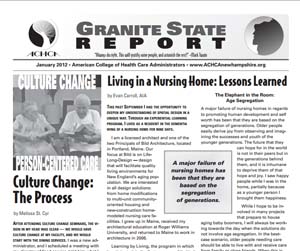
Bild’s Evan Carroll has published an article in the Granite State Report titled Living in a Nursing Home: Lessons Learned.

This is the first publication in which Evan discusses his conclusions from living in a nursing home in detail.

Evan talks about his experience at the Home, as well as tips for improvements. You can find the full article by clicking here.

We enjoy receiving your feedback. Please feel free to contact us by email: sasha@bildarchitecture.com

Posted in life-long design | Comments Off

Maine Home + Design: At Home at Any Age

At Home at Any Age: Maine Home + Design magazine’s January/February 2012 edition highlights Bild Architecture’s housing design goals. Our very own Evan Carroll speaks about how housing design ideas have influenced his life as a young architect. Evan’s article can be found here.

We enjoy receiving your feedback. Please feel free to contact us by email: sasha@bildarchitecture.com

Posted in life-long design, news | Comments Off