
 Bild Architecture is featured in the September 2011 Maine Home + Design Magazine’s design news column titled “Design Wire“. We are excited to be included in Maine’s premier Architectural Magazine!
Bild & Maine Home + Design Magazine
Posted in news
Comments Off
Bild @ Peloton Labs
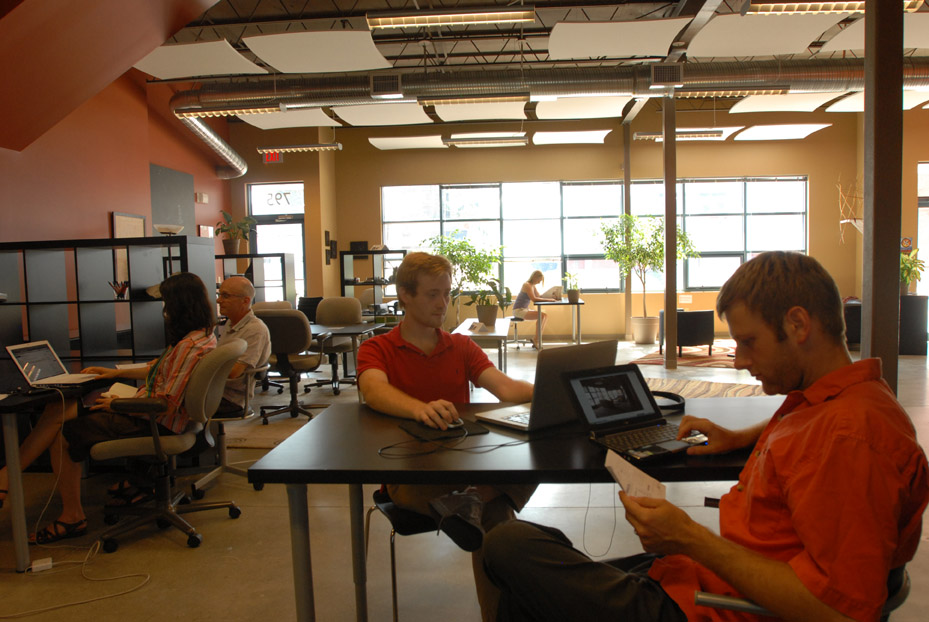 The month of August has been an exciting time for Bild Architecture! It has brought in new jobs, (including a renovation for a family camp on Sebago Lake), the start of our email campaign, and our new workspace: Peloton Labs.
Working at Peloton Labs has been a wonderfully stimulating experience for us. If you didn’t already know, Peloton Labs is a co-working space. This means the Bild is renting two desks in a open office space where we regularly share ideas with professionals from many different disciplines. Peloton has marketing professionals, transportation advocates, website designers, professional organizations, developers, a resident artist, and now. . . architects.
The word “Peloton” is French and refers to the “pack” formed by racing cyclists. This pack has greatly reduced wind drag in the middle, and thus if the cyclists all take turns at the front of the pack, the whole group is able to ride faster for longer. I think you probably now understand that Peloton Labs hopes to be MORE than the sum of it’s parts!
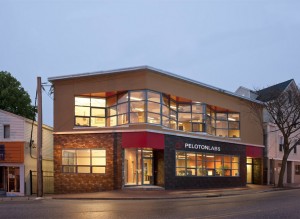
This idea that a group of creative, motivated people can do things that they wouldn’t have dreamed of doing separately is central to our own beliefs at Bild. We are certainly proud of our own design and collaboration skills, but we are even more excited to team our skills with other professionals. It seems obvious to us that Portland, as a whole, embodies this philosophy, and that is why we live and practice here.
Peloton has a conference room available for use by all of it’s members as well as a kitchenette, a printer, WIFI and “phone rooms.” Some professions I would like to see at Peloton in the future are Realtors, Engineers and Photographers.
Posted in news
Comments Off
Portland Jetport sneak preview
 Bild Architecture, along with fellow members of the Portland Society of Architects, was treated to a sneak-peek at Portland Jetport’s (PWM) new terminal expansion. This tour was arranged by the PSA, and was another great benefit to being a member of the organization.
Our introduction to the new terminal began with a presentation regarding funding, and the revenue-building aspects of PWM. The presentation furthered my understanding of how airports remain profitable. I learned that automobile rentals bring over $20 million to Portland each year. Auto rentals combined with parking revenue make up 52% of the Portland Jetport’s annual revenue. Kind of like a $5.00 fountain soda at the movie theater!
The architecture tour began at the street entrance to the jetport. As you enter the new entrance, one of the ticket counters sits below a large textured wall. This wall is given further accentuation through the use of multicolored LED lighting. Our tour continued, behind the scenes, through the baggage handling area. The equipment filled a large room with different levels of heavy belts, machinery and intricate shipping lanes. I thank PWM for this rare opportunity to see baggage handling equipment.
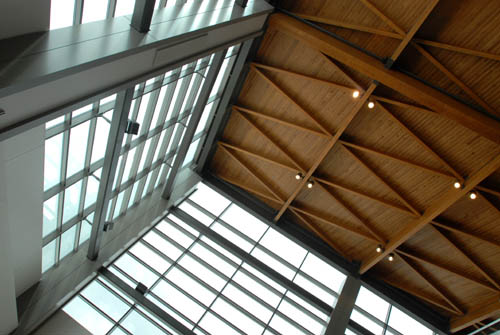
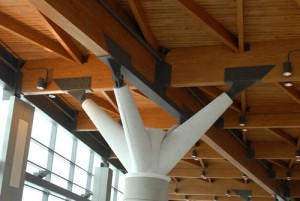
After going behind the scenes, we headed to the third floor where the new security screening equipment is located. The wooden ceiling enclosing the new terminal has a eye catching visual impact as you enter the space. The geometric angles and natural wood finish provide a memorable space for visitors. I was pleased to see such an attractive use of wood and windows in Maine’s new terminal. Large metal support arms, designed to evoke trees, carry the ceiling with thick steel-tipped fingers.
Ample space is provided for post-screening staging. Passengers will then progress to the second floor to meet their passenger gate. Comfortable seating, concessions, and abundant electrical and USB outlets greet passengers at the gate, and it’s time to relax!
Thanks to PWM and PSA for making this tour happen.
Posted in reviews
Comments Off
The Fifth Maine
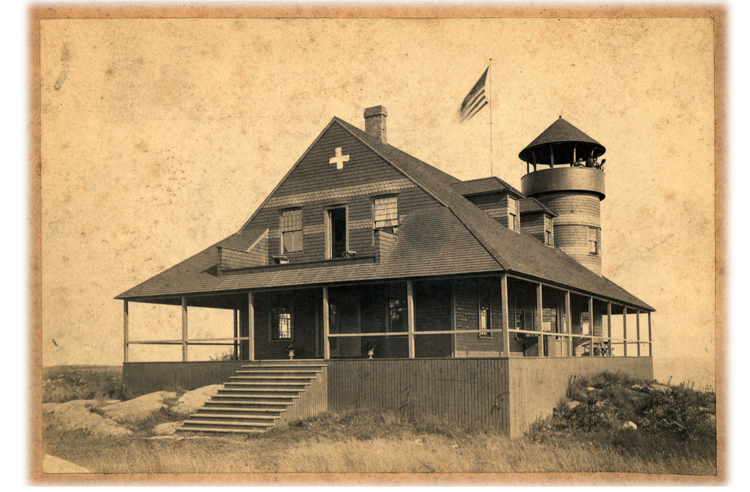 Last spring I completed the “Portland History Docent” training course through Greater Portland Landmarks. This summer, I am volunteering my time to lead tours and answer questions at the Fifth Maine Regiment Memorial Hall on Peaks Island. The museum houses exhibits focusing on Maine’s role during the Civil War, as well as Peaks Island history.
The building was built in 1888 as a reunion hall and summer cottage for the Fifth Maine veterans and their families. The Queen Ann style building, designed by Portland architects Francis Fassett and Frederick Thomson, features post and beam construction, a tower on the south side and a 10’ covered piazza surrounding the entire building. The hall sits on donated land and was constructed by the veteran’s themselves. Funds for construction of the building were raised by selling stained glass Memorial Window panes bearing the names of the veterans of the Fifth Maine’s 10 companies. The building was used as a summer retreat by the veterans, their families and decedents until 1948. In 1954, the hall was conveyed to the Fifth Maine Community Association who preserved the building as a civil war museum. In 1978 the hall was added to the National Register of Historic Places, and recognized in 1984 by Greater Portland Landmarks.
If you’ve never been, plan to visit the Fifth Maine Memorial Hall next time you visit Peaks Island. Be sure to bring a bag lunch and enjoy a picnic on the back porch overlooking whitehead passage and the open Atlantic.
Posted in news
Comments Off
Bild attends Pecha Kucha Portland
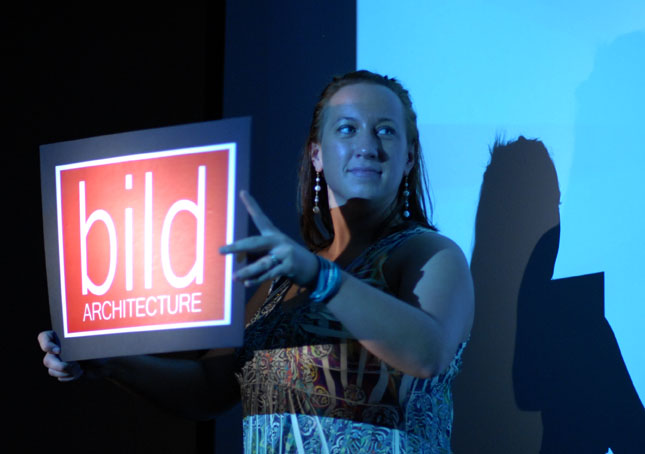 Bild attended the 16th volume of Pecha Kucha Portland yesterday evening! Pecha Kucha was started in 2003 in Tokyo by Klein Dytham Architects. PK was conceived as a place for designers to meet, network, and showcase their work in public. PK’s format, 20 slides x 20 seconds each, encourages concise and interesting presentations while allowing several designers to present in a single evening. PK Portland’s summer event, held July 21st 2011 at the Portland Public Library, turned out to be another fabulous success for the presenters and the audience!
This summer’s presentation line-up included:
- Mike Libby: sea as muse and material resourcefulness
- April Powell: sharing the beauty of demystifying nutrition
- Carolyn Gage: the butch visibility project
- TJ McDermott: sculptor
- Nancy 3. Hoffman: the umbrella cover museum
- Lea Moon: the awake collective/monkey marketing
- Dave Weinberg: cellphone sketchpad 3.0
- Peter Turner: the learning stool
- Raphael DiLuzio: Maine Center for Creativity
Evan and Sasha have served as board members for Pecha Kucha Portland since the summer of 2010. Evan presented his architecture work at the very first PK Portland on October 12, 2007. Evan’s presentation compared the public spaces he encountered while studying abroad in Florence, Italy to those in his college thesis “A Students Realm, A Place to BE at Roger Williams University” . Evan and Sasha co-presented their work on “Vegetable Sculpture” at the February 2010 PK Portland, and later MC’d the October 2010 event. Bild is proud to serve as a “flashlight” sponsor and board member for such a wonderful organization. A big thanks to PK Portland’s biggest sponsor the Maine Center for Creativity. PK Portland’s next event will be held at SPACE Gallery on October 20th, 2011. Hope to see you there!
Posted in news
Comments Off
What is Bild Architecture about?
Welcome to Bild’s first “frequently asked questions” blog!
 What is Bild Architecture?
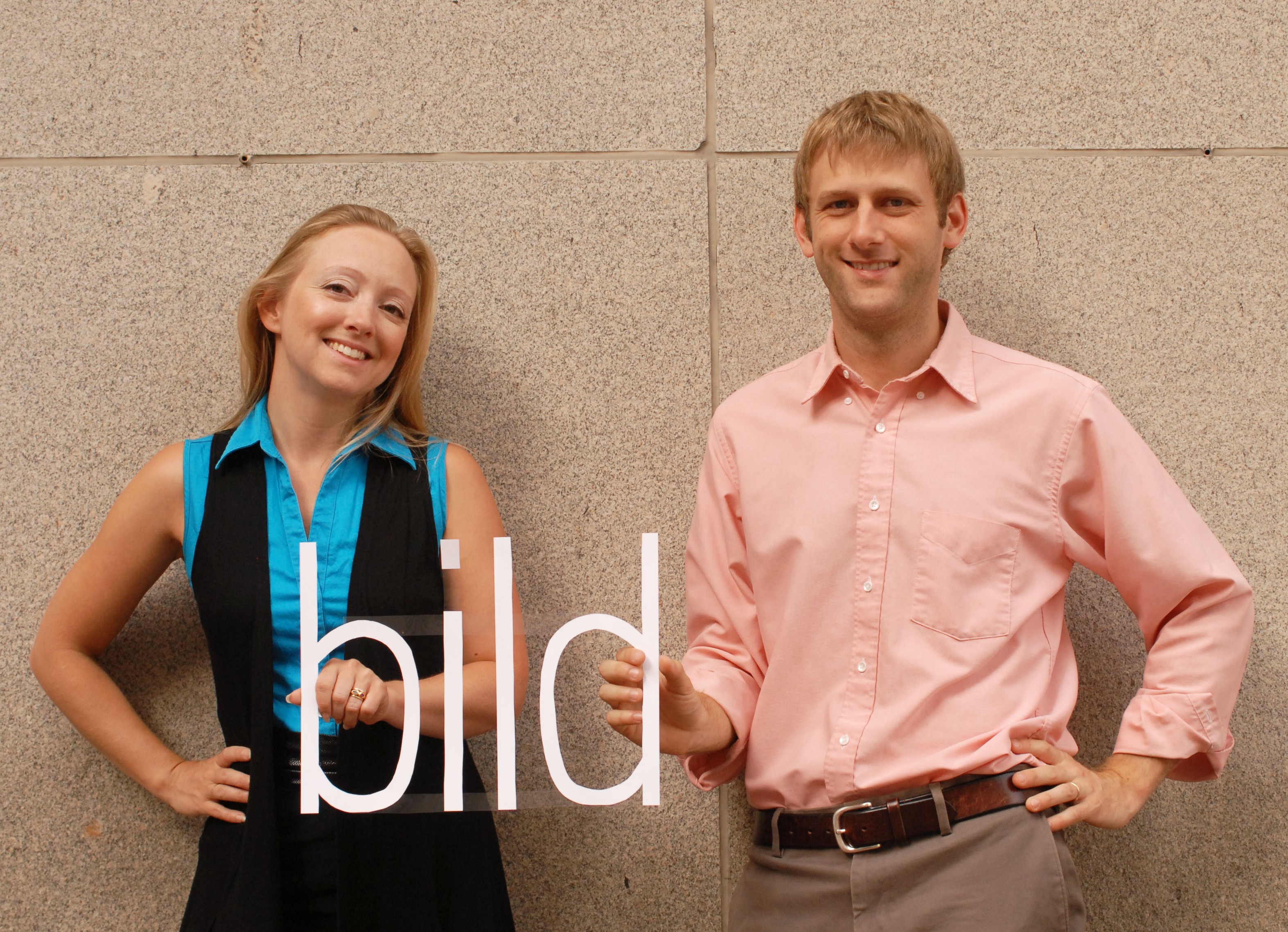
Bild Architecture LLC is a 2011 formed architecture firm whose partners, Evan Carroll and Sasha Salzberg, have over five years of design experience and over a decade of management experience. Bild’s current specialties include design of residential and small commercial projects, and consulting for permitting and project feasibility. (Want to know more about our experience? See our portfolio.)
Why “bild”?
The name “bild” is a misspelling of “build” chosen for it’s symmetrical composition in lowercase. We like the concept of “build” because it is a word of action that implies progress. It also turns out that “bild” means “picture” in German, and that there is a German tabloid called “Bild.” While this could have dissuaded us from using the word, we decided that few people would ever get us confused with a German tabloid.
How is Bild different from other architecture firms?
At Bild, we are proud of our communication skills. We have developed methods for graphically communicating design that we believe truly empower our clients to have influence and input in the design process. We have facilitation and consensus building experience that can be invaluable in bringing groups of interested parties to a unified conclusion about design, zoning, cost management or other issues. We are skilled at brainstorming and communicating project visions that become the driving forces behind successful completion of design projects. (Want to read more about our firm? See who we are.)
What is Bild passionate about?
One of the deepest values shared at Bild is our connection to our families and to loved ones, and we hope that through our architecture we can help others reinforce their own personal relationships. We hope, as the opportunities arise, to be able to serve baby boomers and empty-nesters as they re-evaluate their lives and consider downsizing their home or aging-in-place.
There is a love and poetry to finding design solutions to these issues because, while they have physical responses in buildings, the solutions also require a careful understanding of who a person expects to grow old with. The lesson learned from existing nursing homes is that living in them can feel like growing old alone, and that it takes more deliberate planning to ensure that people don’t grow old alone. The challenge of creating a physical environment that keeps people from being isolated while also thinking carefully about planning for support from loved ones goes right to the heart of our personal values at Bild Architecture. (Want to share your passion with us? See our sketch project.)
What’s so great about Evan?
Evan has over five years of architectural experience with design, project management, detailing, and construction management. He has broadened his experience skill list through numerous volunteer positions that have allowed him to develop skills as a facilitator, moderator and consensus builder. These positions have also given him first-hand experience in how policy changes can be made and how public process can be navigated to benefit the project owner, the governing body, and the greater community. (Want to read more about Evan? See Evan’s bio.)
Why is Sasha even greater than Evan?
Sasha has over ten years of experience with business, including personnel management, small business management, budget creation, marketing plan creation, and marketing design. Sasha has a knack for recognizing and encouraging the strengths of those around her, and is practiced at creating a brainstorming climate for idea generation and finding creative solutions to problems. Sasha also volunteers on numerous local boards and committees where she hones her skills in planning, outreach, and interpersonal relations. (Want to read more about Sasha? See Sasha’s bio.)
Bild seems new to the architecture scene. . . should anyone be worried about this?
We feel excited to be part of what is definitely a groundswell of young professionals who are literally networked together by the digital culture we grew up in. Our peers are, like us, connected, involved and full of new ideas and fresh thinking. Bild may be a new architectural firm, but our previous experience, communication skills, and critical thinking skills will bring Bild and our clients successfully through any project we undertake. (See some of our friends.)
Posted in educational
Comments Off
What do Architects DO?!
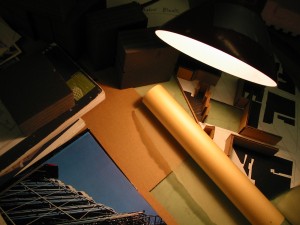
I’ve had a few conversations recently about my work, and I’ve noticed that not everyone knows what architects DO! If you’ve ever been curious about what architects do, I hope that this post will help. First, here are a few common misconceptions about architects:
- “Architects build and construct buildings” – Architects only DESIGN buildings and this is typically done using, pencil, paper and computer software. A contractor or builder is hired to physically construct the building out of bricks, mortar, wood, steel, concrete and many other materials.
- “Architects produce a product for their clients” – Architecture is a professional practice that provides a service to a client. Architects create drawings that guide the construction process, but these drawings are provided as part of a professional service that could also include consulting about project planning, management, construction or energy conservation.
- “Architects are not needed if you have a good builder” – First of all, many local regulations expect architects to be involved in construction projects, just as lawyers are expected to be in courtrooms. Also, architects have years of experience and professional training specifically geared towards creating value for a client. Architects can provide value in many ways including: resale value, energy efficiency, cost per square foot, speed of construction and last but not least, aesthetic beauty.
-
So at a minimum, architects provide design services to people (clients) looking to build something. Architects often classify their projects as “residential” and “commercial.”
For a residential client, design services almost always include the layout of the rooms in the house as well as drawings showing how the house will look from the street. The architect is also often involved in designing the walls and roof of the house to be energy efficient, and is often involved in choosing interior finishes like counters and floors. Once the owner and the architect have agreed on a design, drawings showing the design are finalized and used by a builder to build the house. The architect may work with the builder throughout construction, to make sure the design works well for the builder and the owner.
-
Architects also have commercial clients. This generic term refers to clients that could be for-profit companies, non-profit organizations, institutions or governments. There is an almost limitless list of services that an architect can provide to commercial clients, and design services can be much more extensive than those for a residential project. Typical design services for a commercial client include:
- layout of required rooms and organization of stairs, elevators and hallways,
- design of wall, roof and foundations to protect building interiors from rain, wind, sun and temperature,
- coordination of structural systems, plumbing systems, air handling systems and any other building systems,
- design of building exterior, including the shape of the building and the materials,
- design of building interior, including finishes, colors, cabinetry and bathrooms, and
- management of sub-consulting design team that includes engineers and other designers.
-
In addition to design services, architects can provide many consulting services for both commercial and residential clients, such as:
- helping the client determine the number and size of rooms that they need (programming),
- assisting the client and the contractor with interpretation of the drawings during the construction process (construction administration),
- guiding the client through required permitting and public hearing processes,
- producing drawings and other graphics used to raise money for the project,
- helping the client choose a contractor based on their particular needs (bidding), and
- creating and coordinating documents and manuals that are handed over to the client when the building is completed.
-
In short, architects help their clients by looking at their construction project in its entirety. Architects can be thought of as executive managers who lead the design of a project as a representative of the client. Here AIA Vermont describes this well:
“Architects are trained to solve problems creatively and within your budget. They know how to reduce building costs, decrease energy needs and increase future resale value through good design. They look beyond your immediate requirements to design flexible, efficient buildings that will adapt to your changing needs.” (AIA of Vermont)
-
Further Resources:
AIA: Questions to ask an architect, webpage – This list of questions is a great simple start to help you think about how to relate to an architect.
AIA: You and Your Architect, booklet – This booklet is definitely worth printing. One of my favorite pages is page 8, where you can find a list of services provided by architects.
AIA: How Design Works for You, website – If you feel like exploring a website for awhile then check this one out. There are some case studies about clients and architects.
Posted in educational
Comments Off
Senior Housing Trends for 2011
This article titled “Top Ten Senior Housing Trends for 2011″ covers a LOT when it comes to what to expect in senior housing this year. The general concepts don’t provide any huge surprises, but there are many details that I found helpful and/or interesting.
For instance, as more people age and financing for construction continues for be difficult, there will be an increase in the demand for housing but not the supply of it. While this will be great for existing facilities, whose prices will go up, it will pose a serious problem for seniors who are newly seeking housing. Many of the ten points in the article discuss how senior housing will be re-envisioned to include more low cost solutions like in-law house apartments, technology to perform monitoring, and multi-generational developments.
Exciting to me is that low cost solutions tend to correspond with LOCAL solutions, and this is discussed in point eight.
Also exciting to me is the opportunity for new innovation in affordability in senior housing. Architects and contractors have the opportunity to create projects, solutions and facilities, that are sustainable simply because they are located in existing communities and with thrift in mind.
Posted in life-long design
Comments Off
Henry Cobb and the Portland Museum of Art
 Last week, we at Bild were able to attend the Bi-Annual Un-Built Design Awards, put on by the Portland Society of Architects and held at the Portland Museum of Art. The event’s goal is to allow Portland architects to share projects and designs that, for one reason or another, have not come to fruition. The projects were divided into three categories: student/intern, residential, and commercial; with fantastic entries in all three categories.
For me however, the highlight of the evening was a talk done by Henry Cobb, the architect of the Portland Museum of Art, about the design of the project.
I have special attachment to this building on account of my two summers working in the PMA maintenance department. In my opinion, the PMA building is the most beautiful contemporary building in town. It was designed with both rigor and sensitivity. It is durable, but not utilitarian, simply organized but meandering in experience, and wildly different from historic buildings but successful in being part of Portland’s urban environment. My experience working at the PMA pushing brooms showed that the building is not just satisfying to experience as a patron, but also as an employee.
Hearing Mr. Cobb speak about the PMA design was further affirmation for me that I love the PMA building. He opened his talk with discussion of the greater context of Portland and how he knew our city before he ever came to design the PMA: His view of Portland is loving and respectful. Cobb talked about his responses to the Portland site: creating a facade for Congress Square, respecting the existing historic buildings owned by the PMA, and creating multiple courtyards in the PMA campus.
One forgets, or may not even notice when wandering through the museum, that the museum is organized in a simple grid that is based on optimal gallery dimensions. This simple grid creates a wonderful variety of spaces each with their own character and interest. Cobb explained the simplicity of the grid and then turned his attention to the “domes.”
Topping each cell of the grid in the museum is an octagonal dome with a sort of cupola at the top for letting in indirect light. The solution, though simple in concept, must have been difficult to execute. The result is a beautiful wash of natural light in many of the galleries.
Cobb’s words were eloquent and modest, and his slides were simple and illustrative. It was a true pleasure to hear Mr. Cobb speak about one of my favorite Portland Buildings, and so I say “Thank you!” to Mr. Henry Cobb, the Portland Museum of Art, and the Portland Society of Architects. Great event!
Posted in reviews
Comments Off
Boston Architecture Tour
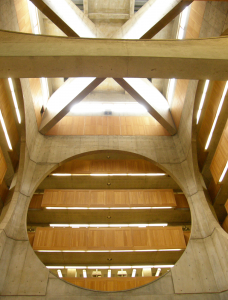
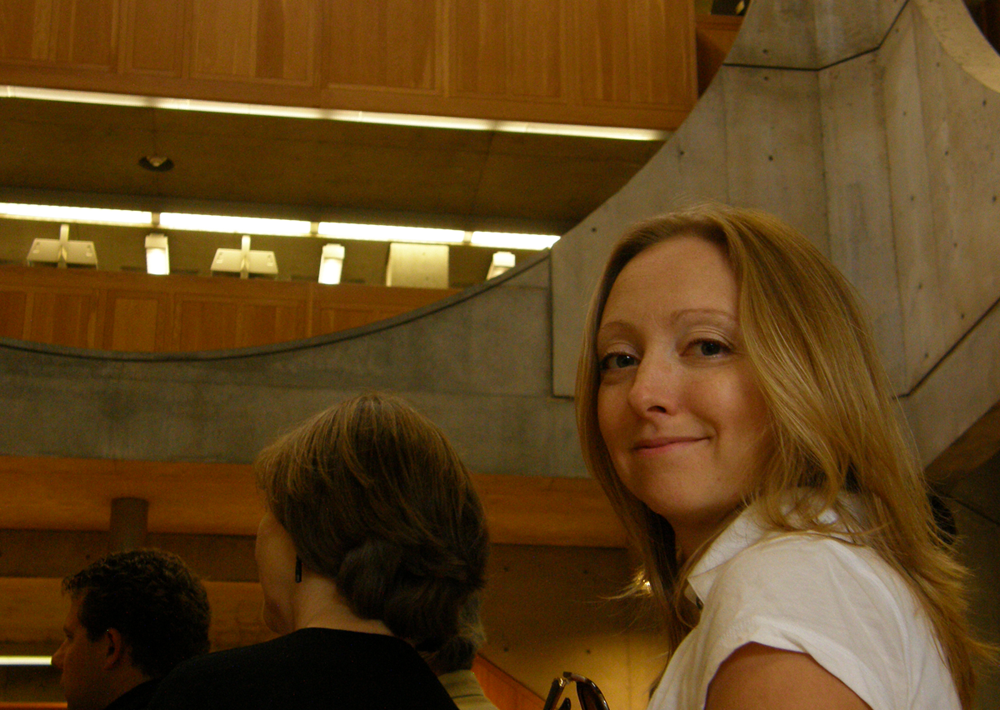
Last Friday, Bild Architecture, along with many friends and colleagues, travelled by bus to the Boston area for a tour of noteworthy architecture. Our adventure began at Philips Exeter Academy in Exeter, New Hampshire. We were met by the original project manager, Winton Scott, who gave us a spectacular tour and some valuable insight into the professional life and creative process of Louis Kahn. The Philips Exeter library is one of Louis Kahn’s most well-known works of art/architecture.
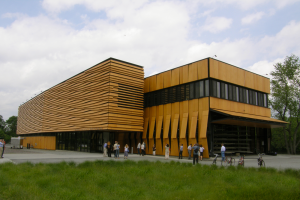
The Harry Parker Boathouse in Brighton, Massachusetts was our next stop on the tour. The Boathouse, a community rowing center, has easy-to-operate doors and windows that allow plenty of air circulation throughout the building and around the sculls. My favorite feature of the building is the wall panel that opens by mechanical means. Four chain operated pulleys open the entire wall section to airflow.
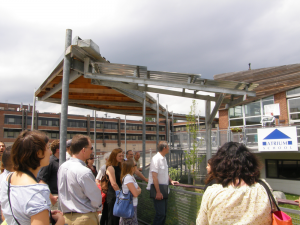
The Atrium school, in Watertown, Massachusetts, provided a fun third stop on our tour. This re-purposed warehouse building boasts plenty of daylight and a fabulous children’s library. Creative solutions to this adaptive reuse kept the cost of renovation down, while providing a wonderfully cheery space for the pre-K through 6th grade Atrium school community.
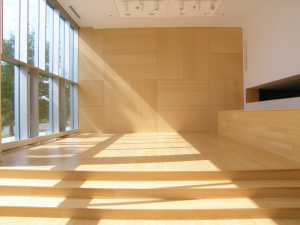
Next, we went back to college for a tour of a Harvard dormitory. Beautiful landscape architecture, brightly colored hallways, and a light filled event space form a building worthy of the Harvard campus. My favorite space in this building was the semi-private 7th floor student lounge equipped with comfortable furniture, a double height space, full glazing wall, and an outdoor patio with views of the Charles River.
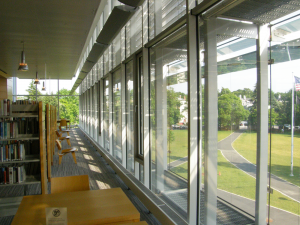
By late afternoon we arrived at the Cambridge Public Library’s main branch. We found the library filled with people enjoying the Friday afternoon June sunshine that poured in through a double envelope window facade. The historic portion of the building has been carefully restored to original colors, period furniture and fixtures. The 3rd floor children’s section offers comfy seating, scaled down desks and chairs, and a wonderful custom carpet designed to resemble stepping stones.
Thank you Portland Society of Architects for another fantastic architecture tour! For more information on events and membership with the Portland Society of Architects, please visit their website portlandarchitects.org.
Posted in reviews
Comments Off